Photomontage is a technique that combines multiple images into a single composition to create a new, often surreal or symbolic, visual narrative. This process can be done manually by cutting and assembling photographs or digitally using editing software like Photoshop. Photomontage has been widely used in art, propaganda, and advertising to convey complex ideas, challenge reality, or tell a story beyond a single image.
The technique became particularly popular in the early 20th century. Today, photomontage remains a powerful tool in contemporary photography, allowing artists to experiment with layering, juxtaposition, and visual storytelling.
Aleksander Rodchenko
In 1923, the Russian constructivist Aleksander Rodchenko began experimenting with photomontage to create striking socially engaged imagery concerned with the placement and movement of objects in space.


1 Photo 6 Genres
This photo contains elements from the Genres:
-portraiture
-surrealism
-landscape
-still life
-nature
-abstract
Juxtapostition


John Stezaker
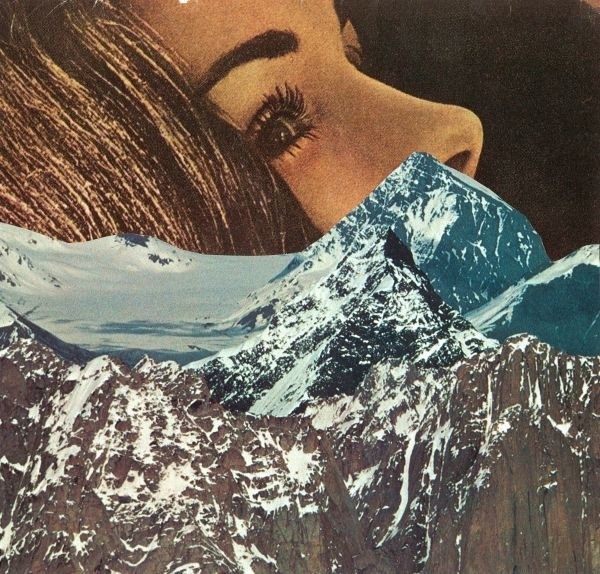
In his collages, Stezaker appropriates images found in books, magazines, and postcards and uses them as ‘ready-mades’. Through his elegant juxtapositions, Stezaker adopts the content and contexts of the original images to convey his own witty and personalised meanings.

John Stezaker uses tone, composition, and collage techniques to create surreal, unsettling portraits. His black-and-white found photographs evoke nostalgia, while subtle tonal contrasts between the spliced halves add visual tension. He aligns facial features with precision, creating a fragile sense of symmetry that’s disrupted by mismatched lighting and perspective. Tight cropping focuses attention on the face, intensifying the emotion evoked by the two images. Through careful juxtapositions and clean cuts, Stezaker transforms familiar images into eerie hybrids that challenge identity, memory, and perception.
Here’s an analysis of John Stezaker’s photomontage work using your structure:
Image selection
John Stezaker often chooses found imagery such as old film stills, postcards, and vintage photographs. His photomontages usually consist of just two to three images carefully selected for contrast or harmony often portraits or landscapes.
Image manipulation
Stezaker manipulates the images by cutting them with precision usually straight down the middle or across key facial features. He may rearrange or overlay parts from different sources (e.g., placing a postcard over a face) to create a surreal or disjointed effect. The manipulation is often subtle but produces a strange, unsettling result.
Image arrangement
He typically overlays one image directly on top of another, with perfect alignment in some areas and jarring disjunction in others (e.g., eyes and mouth mismatched) There is sometimes a subtle contrast in scale when elements don’t quite align, adding to the sense of disruption or unease. He juxtaposes faces with landscapes, or film stills with blankness, forcing the viewer to question identity and context. His photomontages often appear flat, but the careful cuts and overlays create a psychological depth, drawing attention to what’s hidden or missing.
Takeaway point
Stezakers work inspires me to think about minimal but powerful image combinations. I like how he creates strong meaning with just two or three images by using precise cuts, overlays, and juxtapositions. For my own photomontage response, I will experiment with overlaying portraits with different backgrounds or textures, and use juxtaposition to distort identity or tell a new story. I want to explore both harmony and tension between images to create a more conceptual outcome.